What Is Behavioral Activation? A CBT Tool for Depression
Depression often creates a vicious cycle: the less you do, the worse you feel, and the worse you feel, the less you want to do. This pattern can make even simple activities, getting out of bed, calling a friend, going for a walk, feel impossibly difficult. If you've been stuck in this loop, you're not alone, and there's a structured, evidence-based approach designed specifically to break it.
So what is behavioral activation? It's a core component of Cognitive Behavioral Therapy that targets the behavioral withdrawal common in depression. Rather than waiting until you "feel like" doing something, behavioral activation works by strategically scheduling meaningful activities to rebuild engagement with life, and in turn, lift your mood.
At Foothills CBT, we use behavioral activation regularly with clients experiencing depression and low motivation. It's one of the most well-researched interventions in clinical psychology, and it works because it addresses the problem directly: when depression makes you retreat, you lose access to the positive experiences that sustain mental health. This article explains how behavioral activation works, why it's effective, and how you can start applying it in your own life.
What behavioral activation means in therapy
In therapy, behavioral activation is a structured treatment approach that helps you deliberately increase engagement with activities that support your wellbeing. Therapists who use this technique recognize that depression creates a pattern of behavioral avoidance, where you stop doing things that once brought satisfaction, connection, or a sense of accomplishment. The therapy works by reversing this pattern through scheduled activity, not by waiting for motivation to return naturally.
The fundamental principle
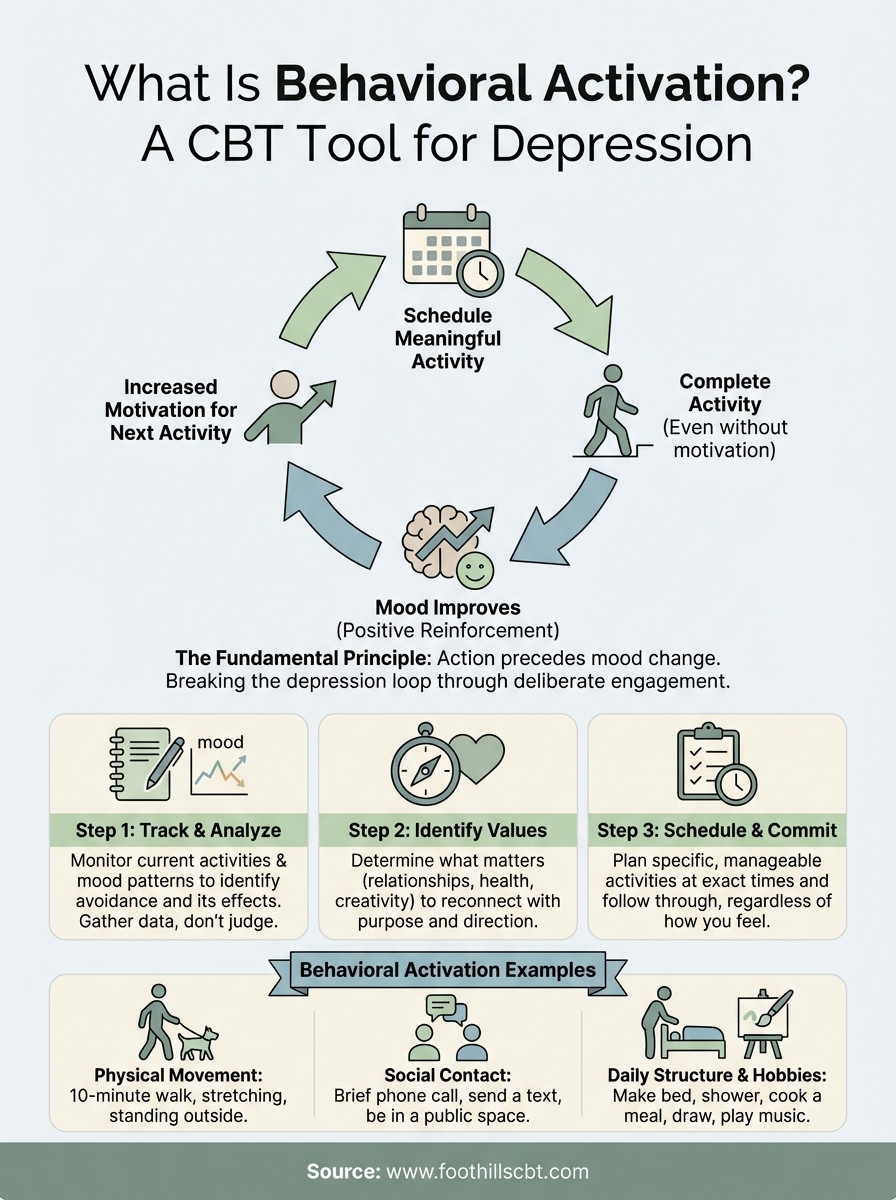
Behavioral activation operates on a straightforward idea: action precedes mood change, not the other way around. Most people assume they need to feel better before they can do more, but the research shows the opposite. When you re-engage with meaningful activities, even when you don't feel like it, your mood improves as a consequence of the behavior. This is what makes behavioral activation different from general advice to "stay busy" or "think positive." It's a systematic process that rebuilds your life structure in a way that naturally lifts depression.
The goal isn't to force yourself into constant productivity. It's to reconnect with experiences that matter, even in small doses.
What therapists focus on during sessions
Your therapist will help you identify which activities have dropped out of your life since depression started. These might include social contact, physical movement, hobbies, or daily routines like cooking or getting outside. Together, you'll examine how withdrawing from these activities has reinforced your low mood, creating a feedback loop where inactivity fuels depression and depression fuels inactivity.
Sessions typically involve tracking your current activity levels and mood throughout the week. Your therapist uses this data to show you the direct relationship between what you do and how you feel. You'll notice patterns, like feeling slightly better after a walk or worse after staying in bed all day. This awareness becomes the foundation for making deliberate behavioral changes moving forward.
Key components therapists use
Therapists structure behavioral activation around specific, measurable goals rather than vague intentions. You won't be told to "be more active." Instead, you'll create a plan that includes exact activities, times, and frequencies. This might mean scheduling a 10-minute walk every Tuesday and Thursday at 9 a.m., or committing to one phone call with a friend each week.
The process also involves graded task assignment, which means starting small and building gradually. If leaving the house feels overwhelming, your therapist might begin with something as simple as sitting on your porch for five minutes. Each completed activity builds momentum and proves that you can take action even when depression tells you otherwise. Therapists adjust the difficulty based on your current capacity, ensuring the approach stays realistic and sustainable.
Why behavioral activation helps depression
Behavioral activation works for depression because it directly targets the behavioral withdrawal that maintains and worsens depressive symptoms. When you're depressed, you naturally avoid activities, social contact, and responsibilities because they feel overwhelming. This avoidance provides temporary relief, but it also eliminates your access to positive reinforcement, the experiences that typically improve mood and create a sense of purpose. Over time, this pattern strengthens depression rather than alleviating it.
The reinforcement trap that keeps you stuck
Depression creates what psychologists call a negative reinforcement cycle. When you cancel plans, stay in bed, or avoid challenging tasks, you feel immediate relief from anxiety or exhaustion. Your brain registers this relief as a reward, which makes avoidance more likely in the future. Unfortunately, this same avoidance cuts you off from meaningful experiences that would naturally lift your mood, like connecting with friends, accomplishing goals, or engaging in activities you once enjoyed.

The temporary comfort of avoidance ultimately deepens depression by removing opportunities for positive emotion and accomplishment.
Behavioral activation interrupts this cycle by reintroducing scheduled activities before you feel ready. Research consistently shows that when you engage in valued activities, your mood improves as a direct result, even if the initial motivation was absent. This is what makes behavioral activation different from simply "staying busy." The activities are chosen specifically because they align with your values and historically provided satisfaction or connection.
Why action creates motivation, not the reverse
Most people misunderstand the relationship between motivation and behavior. You assume you need to feel motivated before you can act, but the evidence shows that action generates motivation after the fact. When you complete an activity, no matter how small, you experience a sense of accomplishment and competence that naturally increases your willingness to do more. This is why behavioral activation emphasizes starting with manageable tasks rather than waiting for inspiration to strike.
How behavioral activation works step by step
Understanding what is behavioral activation is one thing, but knowing how to implement it transforms theory into practical change. The process follows a clear sequence that therapists use to help you move from withdrawal to engagement. Each step builds on the previous one, creating a structured path out of the behavioral patterns that maintain depression.
Track your current activity and mood patterns
Your first task involves monitoring what you actually do throughout the day and how you feel during and after each activity. You'll record everything from staying in bed to scrolling on your phone to completing work tasks. Alongside each activity, you rate your mood on a simple scale, typically 0 to 10. This tracking reveals patterns you might not notice otherwise, like feeling slightly better after a shower or worse after hours of inactivity.

The data you collect becomes the foundation for change. You're not tracking to judge yourself or prove you're failing. You're gathering evidence about which activities correlate with better or worse mood states. Most people discover that even small actions, getting dressed, stepping outside, texting a friend, create measurable mood improvements they hadn't recognized.
Identify values and meaningful activities
Next, you work with your therapist to determine what matters most to you in life. These values might include relationships, health, creativity, learning, or contribution. Depression typically causes you to abandon activities connected to these values, which is why your life feels empty. The goal here is to reconnect with purpose by identifying specific activities that align with what you care about.
Your values become the compass that guides which activities you prioritize, ensuring the behavioral changes feel meaningful rather than arbitrary.
Schedule specific activities and follow through
The final step requires you to commit to exact times for valued activities, regardless of how you feel in the moment. You'll start with manageable tasks and gradually increase difficulty as you build confidence. Your therapist helps you problem-solve barriers that arise and adjust the plan when needed. The key is treating these scheduled activities as non-negotiable appointments with yourself, following through even when motivation is absent.
Behavioral activation examples you can try
Now that you understand what is behavioral activation and how it works, you need concrete examples to start implementing it in your own life. The activities you choose should align with your values and include things you've stopped doing since depression started. These examples span different life domains, giving you options regardless of your current energy level or circumstances.
Physical movement that fits your capacity
Physical activity consistently shows mood-boosting effects in research, but you don't need to commit to intense workouts. Start with a 10-minute walk around your block each morning, or spend five minutes stretching after you wake up. If leaving your home feels overwhelming, try walking to your mailbox or standing on your porch for a few minutes. The goal is movement that matches your current ability, not an idealized fitness routine you can't sustain.
Even minimal physical activity creates immediate biochemical changes that improve mood, separate from any fitness benefits.
Social contact without overwhelm
Depression thrives on isolation, so rebuilding connection becomes essential. You might text one friend per day, even if it's just a single message. Schedule a brief phone call with someone you trust, limiting it to 10 or 15 minutes if longer conversations feel draining. Consider sitting in a coffee shop or library where you're around other people without the pressure of direct interaction. These small steps reintroduce social reinforcement without requiring energy you don't have.
Daily structure and self-care tasks
Establishing basic routines creates stability that counters depression's chaos. This includes showering at the same time each day, making your bed each morning, or preparing one home-cooked meal per week. You might also schedule creative activities you've abandoned, like spending 15 minutes drawing, playing an instrument, or working on a hobby project. The specific activity matters less than the act of deliberately engaging with something beyond passive consumption.
Behavioral activation in CBT and other therapies
Behavioral activation functions as both a core component of Cognitive Behavioral Therapy and a standalone treatment for depression. Understanding what is behavioral activation means recognizing its flexibility across different therapeutic frameworks. While it originated within CBT, therapists have adapted and integrated these principles into various treatment approaches, making it one of the most widely applicable interventions in modern psychology.
How CBT uses behavioral activation
CBT practitioners treat behavioral activation as a foundational element alongside cognitive restructuring. When you work with a CBT therapist, you'll likely begin with behavioral activation before addressing thought patterns. This sequencing happens because increasing activity often improves your mood enough that negative thoughts naturally decrease, making cognitive work easier. Your therapist integrates both approaches, using activity scheduling to change what you do while examining the thoughts that maintain avoidance patterns.
Behavioral activation creates the behavioral foundation that makes cognitive change possible, not just a preliminary step to "real" therapy.
Behavioral activation as standalone therapy
Research demonstrates that behavioral activation works effectively as an independent treatment without additional cognitive components. Brief Behavioral Activation Treatment (Bbat) and Behavioral Activation Treatment for Depression (BATD) are structured protocols that focus exclusively on activity scheduling and values-based action. These approaches prove particularly useful when cognitive therapy feels too abstract or when you're so depressed that examining thoughts seems impossible. The treatment remains straightforward, helping you reconnect with life through deliberate action rather than extensive analysis.
Integration with other approaches
Therapists incorporate behavioral activation principles into Dialectical Behavior Therapy (DBT), Acceptance and Commitment Therapy (ACT), and trauma-focused treatments. DBT uses opposite action, essentially behavioral activation applied to emotional regulation. ACT emphasizes values-based action despite difficult feelings, which mirrors the behavioral activation principle of acting before motivation appears. This widespread adoption reflects the intervention's fundamental effectiveness in addressing the withdrawal that characterizes multiple mental health conditions.
Where to go from here
You now understand what is behavioral activation means and how this evidence-based tool addresses the behavioral withdrawal that fuels depression. The research supporting this approach is extensive, and the principles are straightforward: schedule meaningful activities, follow through regardless of your mood in the moment, and track the connection between what you do and how you feel. Small, consistent steps create the momentum that breaks depression's grip.
If you're struggling with depression, low motivation, or feeling stuck in patterns of avoidance, working with a therapist trained in these techniques accelerates your progress significantly. At Foothills CBT, our doctoral-level psychologists use behavioral activation as part of comprehensive, research-backed treatment for depression and related conditions. We offer both in-person sessions in Boulder and telehealth appointments throughout Colorado. Contact our team at Foothills CBT to learn how we can help you build the skills and structure needed to move forward.