
Dialectical Behavior Therapy (DBT)

What Is Dialectical Behavior Therapy (DBT)?
Dialectical Behavior Therapy (DBT) is an evidence-based treatment designed to help individuals better understand and manage intense emotions, thoughts, and behaviors. Originally developed for individuals struggling with chronic emotional distress, DBT is now widely used to treat a range of concerns, including anxiety, depression, trauma, relationship difficulties, and impulsive behaviors.
Rather than trying to eliminate difficult emotions, DBT focuses on helping you respond to them more effectively. Many people who benefit from DBT experience emotions more intensely or have difficulty returning to a calm baseline after stress. This is not a personal failure—it often reflects how the nervous system processes emotional experiences and how coping skills were learned over time.
DBT combines practical behavioral strategies with mindfulness and acceptance-based approaches. The goal is to help you build lasting skills for emotional regulation, improve relationships, and create meaningful, sustainable change in your daily life.
DBT-Informed Therapy Can Help You
DBT-informed therapy is a structured, skills-based approach that focuses on helping you manage emotions and navigate challenges more effectively. Through therapy, you’ll learn how to:
Increase awareness of your thoughts, emotions, and behavioral patterns
Manage distress without relying on avoidance or impulsive reactions
Build practical coping skills for handling stress and emotional overwhelm
Improve communication, boundaries, and relationship effectiveness
Balance acceptance of your experiences with the motivation to create change
Rather than feeling controlled by your emotions, you’ll develop the ability to pause, understand what’s happening internally, and choose how to respond.
Our DBT-informed approach is more than simply talking through overwhelming emotions.
Together, you and your therapist will work to understand how your thoughts, emotions, and behaviors interact. Many people notice that emotional reactions happen quickly and feel difficult to control. Therapy helps slow that process down so you can respond more intentionally rather than reacting automatically.
Through guided self-awareness and skill development, you’ll learn how to:
Recognize emotional triggers earlier
Understand how thoughts and behaviors influence emotional intensity
Develop tools to regulate emotions more effectively
Build confidence in handling stressful situations
This approach is especially helpful for individuals who feel overwhelmed by their emotions or stuck in patterns that are difficult to change.
What DBT-Informed Therapy Can Help With
Intense Emotions & Distress
Learn practical tools to manage emotional overwhelm, reduce reactivity, and stay present during difficult moments.
Depression & Low Mood
Build structure, improve emotional awareness, and develop healthier responses to negative thoughts and persistent low mood.
Impulsive or Harmful Behaviors
Identify patterns linked to emotional distress, including suicidal ideation, self injury and other coping behaviors that may provide short-term relief but create long-term challenges.
What to Expect in DBT Sessions
Sessions are collaborative, structured, and focused on building practical skills. From the beginning, you and your therapist will work together to identify your goals, understand your challenges, and create a personalized plan for growth.
Sessions may include:
Exploring current challenges and emotional patterns
Understanding how thoughts, emotions, and behaviors interact
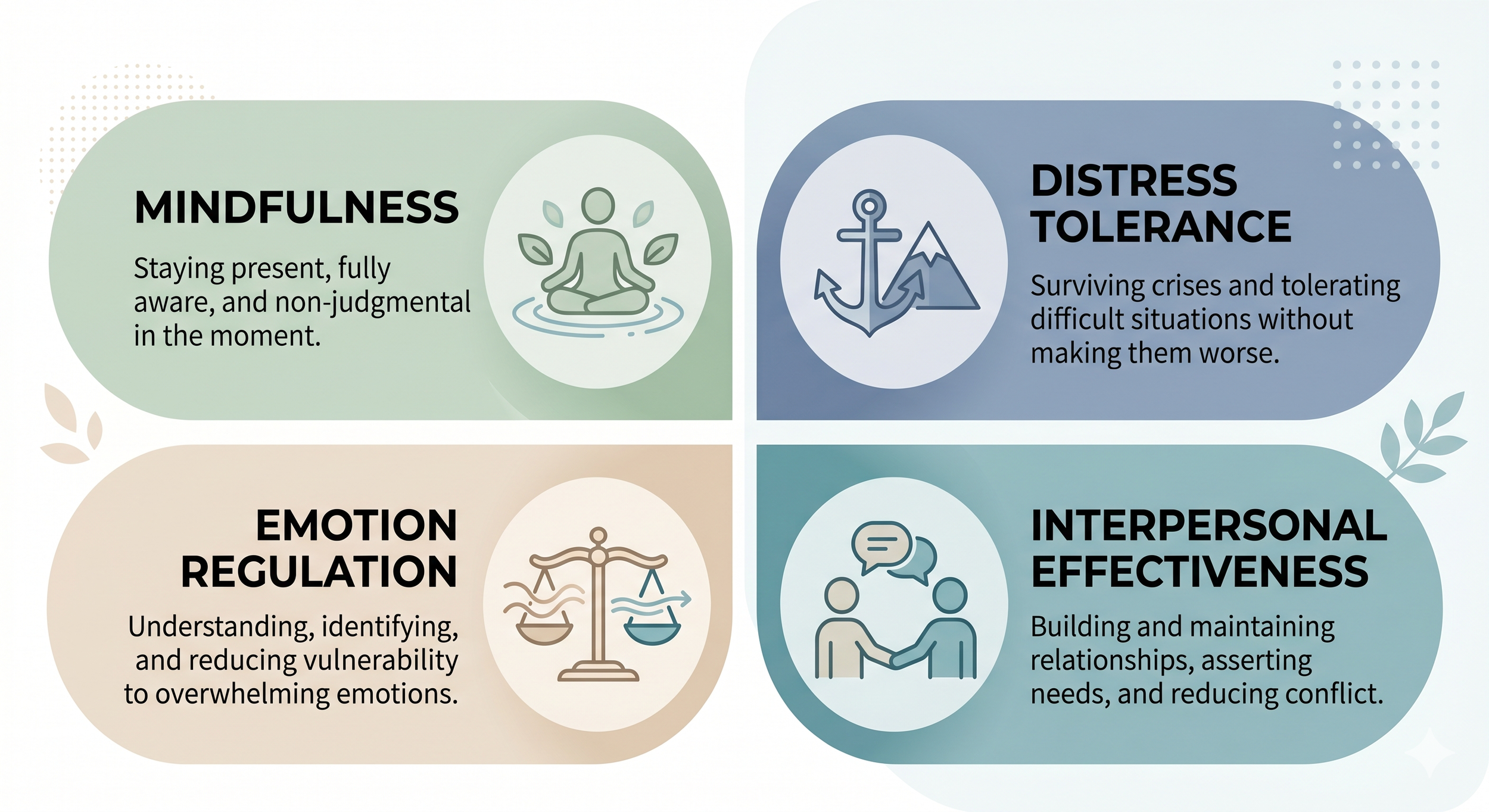
Practicing mindfulness and distress tolerance strategies
Building emotion regulation and interpersonal skills
Applying tools between sessions to support steady progress
This approach emphasizes consistent practice and real-life application, helping you build confidence in managing emotions, relationships, and daily stress over time.
Frequently Asked Questions
-
Dialectical Behavior Therapy (DBT) is a structured, evidence-based therapy that helps individuals manage intense emotions, reduce harmful behaviors, and build healthier coping skills. It combines practical strategies with mindfulness, acceptance, and emotional regulation techniques.
-
DBT can help with emotional dysregulation, anxiety, depression, self-destructive behaviors, relationship difficulties, anger, stress, and other challenges involving intense emotions or ineffective coping patterns.
-
DBT is based on cognitive behavioral therapy but places a stronger emphasis on mindfulness, acceptance, distress tolerance, and balancing change with validation. It is especially helpful for people who feel overwhelmed by strong emotions.
-
DBT sessions often focus on understanding emotional triggers, identifying unhelpful patterns, and learning practical skills to manage distress, improve relationships, and respond more effectively in difficult situations.