
Parent-Child Interaction Therapy (PCIT)
Evidence-Based Support to Help Your Child—and Your Family—Thrive.

What Is Parent-Child Interaction Therapy (PCIT)?
Parent-Child Interaction Therapy (PCIT) is a research-backed treatment for young children who struggle with tantrums, defiance, aggression, emotional dysregulation, or frequent power struggles. PCIT helps parents respond calmly and consistently while strengthening connection with their child.
Unlike traditional child therapy, parents are actively involved in every session and receive live coaching from the therapist to build practical skills that create lasting change at home.
PCIT can help you:
Reduce tantrums, defiance, and aggressive behaviors
Improve listening, cooperation, and emotional regulation
Strengthen the parent-child relationship through guided play
Build calm, consistent parenting strategies that work at home
Lower stress and create more peaceful daily routines
Rather than placing the pressure on your child to “behave better,” PCIT gives you clear tools to change behavior patterns at the root.
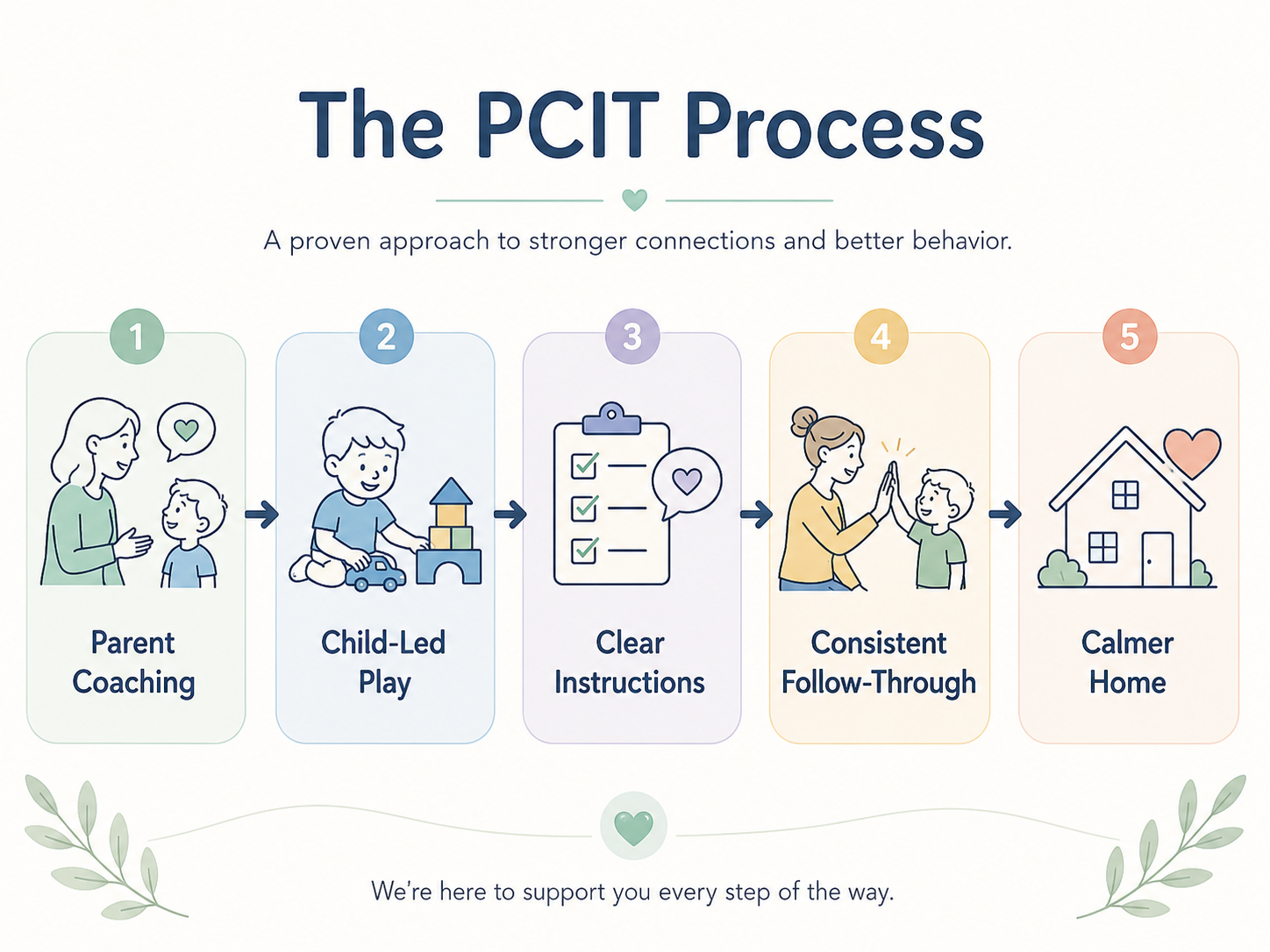
PCIT is typically structured in two phases: Child-Directed Interaction, which builds connection through play, and Parent-Directed Interaction, which teaches calm, consistent follow-through.
If your child struggles with tantrums, defiance, aggression, or emotional dysregulation, PCIT can help your family build more cooperation, confidence, and connection.
A Structured, Coaching-Based Approach
PCIT is more than traditional child therapy. It is an active, parent-involved treatment where you practice new skills with your child while your therapist coaches you in real time.
Through live coaching, you learn how to respond calmly, give clear directions, strengthen positive behavior, and reduce daily power struggles. This helps create lasting change at home, not just during sessions.
What PCIT Can Help With
Tantrums & Meltdowns
PCIT helps reduce frequent tantrums and emotional outbursts by teaching parents calm, consistent responses that support better regulation.
Defiance & Power Struggles
PCIT gives parents practical tools to improve listening, cooperation, and follow-through during daily routines and challenging moments.
Aggression & Big Emotions
PCIT supports children who struggle with aggression, impulsivity, ADHD symptoms, or emotional sensitivity by building connection and clear structure.
What to Expect in PCIT Sessions
PCIT sessions are active, supportive, and parent-involved. From the beginning, you and your therapist will work together to understand your child’s behavior, strengthen your relationship, and practice skills that create calmer moments at home.
Sessions may include:
Learning child-led play skills that build connection
Practicing praise, reflection, imitation, description, and enjoyment
Receiving live coaching from your therapist during sessions
Learning how to give clear, effective instructions
Building calm, consistent follow-through for difficult behaviors
Applying PCIT skills at home between sessions
PCIT helps parents feel more confident and prepared, while giving children the structure, warmth, and consistency they need to listen better, regulate emotions, and cooperate more often.
Frequently Asked Questions
-
PCIT is typically designed for children ages 2 to 7 who struggle with tantrums, defiance, aggression, emotional dysregulation, or difficulty following directions.
-
In PCIT, parents are actively involved in each session. Your therapist provides live coaching while you interact with your child, helping you practice new skills in real time.
-
Many families begin noticing improvement within 6 to 8 sessions. A full course of PCIT often takes around 12 to 20 sessions, depending on your child’s needs and your family’s goals.
-
Yes. PCIT can support children with ADHD symptoms, emotional sensitivity, frequent meltdowns, impulsivity, and power struggles by improving connection, structure, and consistency at home.