How To Stop A Panic Attack: Fast Skills In The Moment Today
Your heart races. Your chest tightens. Your mind spirals. If you've ever experienced a panic attack, you know how terrifying those moments can be. And when you're in the middle of one, knowing how to stop a panic attack quickly becomes the only thing that matters.
The good news? Panic attacks, while intense, are highly treatable, and there are evidence-based techniques you can use right now to regain control. At Foothills CBT, our team of clinical psychologists specializes in helping people throughout Colorado overcome panic and anxiety using proven cognitive-behavioral approaches. In this guide, we'll walk you through practical, in-the-moment skills to calm your nervous system and interrupt the panic cycle before it takes over.
Know what's happening and when to get urgent help
Before you learn how to stop a panic attack, you need to recognize what's actually happening in your body. A panic attack is your nervous system's alarm bell firing incorrectly, triggering a flood of adrenaline even when no real danger exists. Your body reacts as if you're facing a life-threatening situation, which explains the intense physical sensations like rapid heartbeat, sweating, trembling, or chest tightness. Understanding this helps you respond correctly instead of fighting against your own biology.
What a panic attack actually is
Panic attacks typically peak within 10 minutes and rarely last longer than 30 minutes total. You experience a sudden surge of overwhelming fear accompanied by at least four physical symptoms such as shortness of breath, dizziness, nausea, or a feeling of losing control. These episodes feel unbearable, but they are not dangerous. Your body is designed to handle this level of arousal, even though every instinct tells you otherwise.
Panic attacks cannot harm you physically, but they can convince you that something terrible is happening.
When to seek emergency care
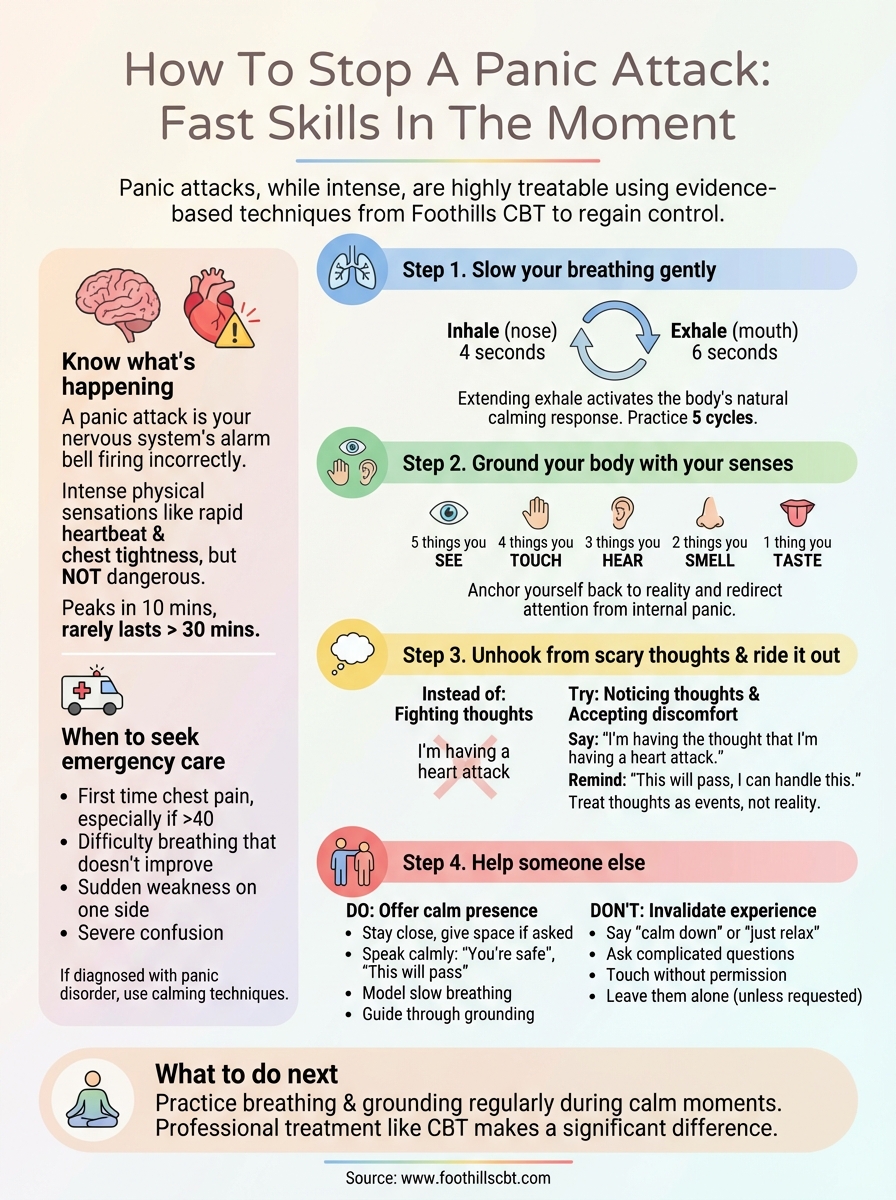
You should call 911 or go to the emergency room if you experience chest pain for the first time, especially if you're over 40 or have risk factors for heart disease. Similarly, seek immediate help if you have difficulty breathing that doesn't improve, sudden weakness on one side of your body, or severe confusion. Medical professionals can quickly determine whether your symptoms stem from panic or require urgent medical intervention.
If you've been diagnosed with panic disorder and recognize your typical symptoms, you can safely use the calming techniques that follow. However, when you're uncertain about what's causing your symptoms, always err on the side of caution and get checked out by a healthcare provider.
Step 1. Slow your breathing without forcing it
When panic strikes, your breathing becomes rapid and shallow, which triggers even more physical symptoms. The fastest way to signal safety to your nervous system is to slow down your breath intentionally, but the key word here is "gently." Forcing yourself to take deep breaths often backfires because it can make you feel more breathless and panicked. Instead, you want to extend your exhale longer than your inhale, which activates your body's natural calming response.
The 4-6 breathing pattern
This simple technique gives you concrete numbers to follow when your mind is racing. Breathe in through your nose for a count of 4 seconds, then breathe out through your mouth for 6 seconds. The longer exhale is what tells your nervous system that you're safe. You can count silently or use your fingers to track each second.

Extending your exhale longer than your inhale activates your parasympathetic nervous system, which directly counteracts panic.
Practice this pattern for 5 full cycles without worrying about perfect execution. Your breath might feel shaky at first, and that's completely normal. Continue breathing at this rhythm even if your heart still races. Remember, learning how to stop a panic attack isn't about making symptoms vanish instantly but about preventing them from escalating further.
Step 2. Ground your body with your senses
Once you've established a breathing rhythm, you need to anchor yourself back to reality. Grounding techniques work because they force your attention away from internal panic sensations and redirect it to concrete, present-moment experiences. Your brain can only focus on so much at once, so when you deliberately engage your senses, you interrupt the panic loop that keeps feeding on itself.
The 5-4-3-2-1 technique
This sensory exercise gives you a specific task when knowing how to stop a panic attack feels overwhelming. Look around and name 5 things you can see, then 4 things you can physically touch. Next, identify 3 things you can hear, followed by 2 things you can smell, and finally 1 thing you can taste. You might notice the texture of your shirt, the sound of traffic outside, or the taste of mint from earlier.
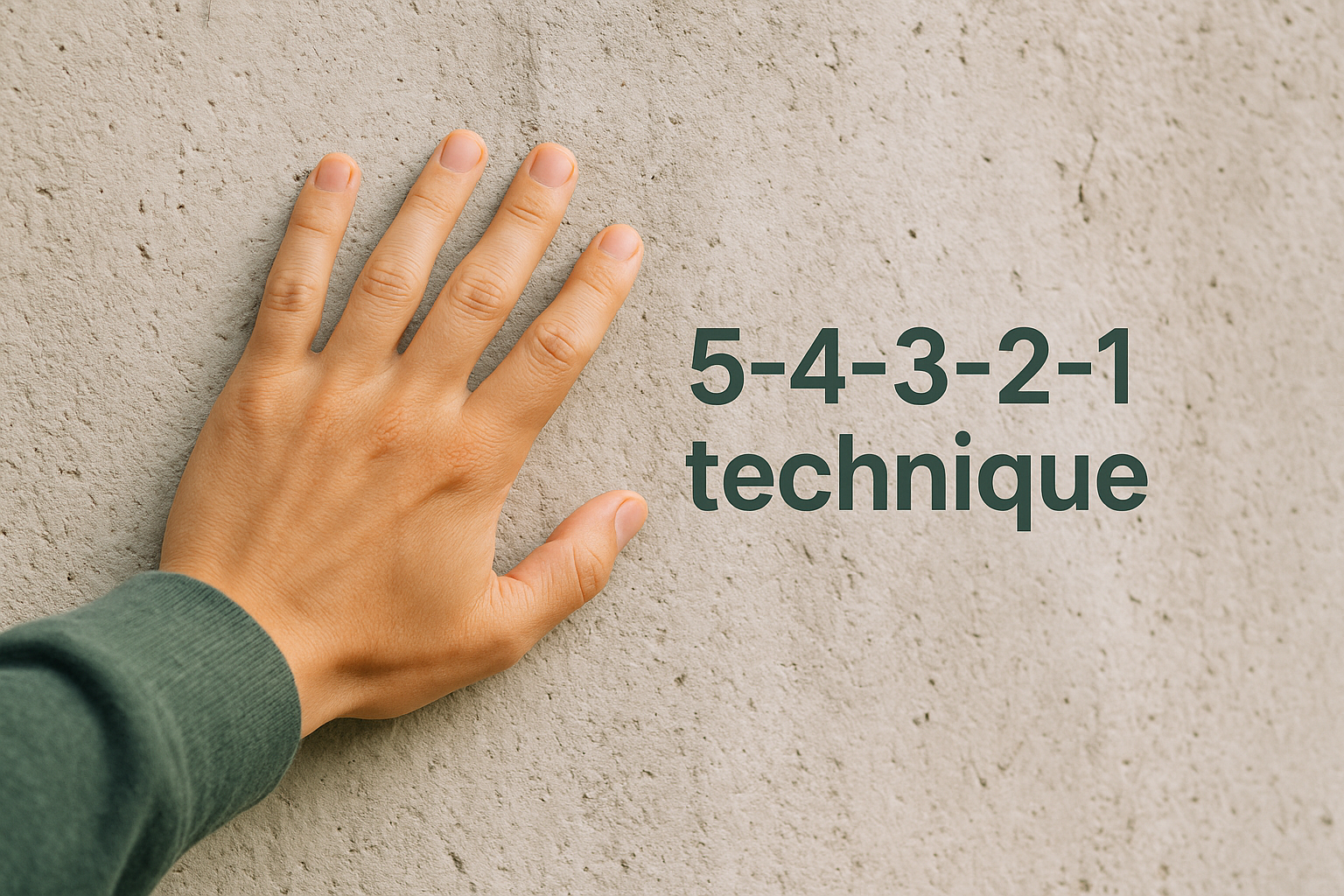
Naming sensory details out loud or in your head forces your prefrontal cortex to engage, which reduces activity in your panic-driven amygdala.
Physical grounding actions
You can also use direct physical contact to bring yourself back to the present moment. Press your feet firmly into the floor and notice the sensation of solid ground beneath you. Hold an ice cube in your hand or splash cold water on your face. Touch different textures around you, noticing whether surfaces feel smooth, rough, warm, or cool. These simple actions create immediate sensory feedback that competes with panic symptoms for your brain's attention.
Step 3. Unhook from scary thoughts and ride it out
Panic attacks come with catastrophic thoughts that feel absolutely convincing in the moment. Your mind tells you that you're dying, losing control, or going insane. These thoughts amplify your fear, which creates more physical symptoms, which generates scarier thoughts. Breaking this cycle is essential when learning how to stop a panic attack, but you don't do it by trying to think positive thoughts or convince yourself everything is fine. Instead, you learn to notice thoughts without treating them as facts.
Notice thoughts without fighting them
Label what your mind is doing by saying internally, "I'm having the thought that I'm having a heart attack" rather than "I'm having a heart attack." This small shift creates distance between you and the thought. You're observing your mind's panic response instead of being consumed by it. Another simple phrase you can use is "There goes my anxious mind again," which acknowledges the thought without giving it power.
Treating thoughts as mental events rather than reality reduces their ability to escalate your panic.
Accept the discomfort temporarily
Remind yourself that panic attacks always end on their own, typically within 10 to 30 minutes. Tell yourself, "This is uncomfortable, but I can handle uncomfortable for a little while." Stop resisting the sensations, which only creates more tension. Let your body complete its alarm response cycle naturally while you continue your breathing and grounding techniques.
Step 4. Help someone else through a panic attack
Watching someone you care about experience a panic attack can feel helpless, but your calm presence makes a real difference. The person in front of you is dealing with overwhelming physical sensations and catastrophic thoughts, so your role is to provide grounding and reassurance without escalating their fear. Understanding how to stop a panic attack from the helper's perspective means focusing on what truly calms someone down rather than what you think should work.
What to say and do
Stay physically close but give them personal space unless they ask for contact. Speak in a calm, steady voice and say things like "You're safe" or "This will pass." Ask simple questions such as "Can you breathe with me?" and then model slow breathing by counting out loud. You can also guide them through grounding by saying "Tell me three things you can see right now."
Your calm presence and steady voice signal safety to someone's overwhelmed nervous system.
What not to do
Never tell them to "calm down" or "just relax," which invalidates their experience and creates more anxiety. Don't ask complicated questions or expect them to have a conversation. Avoid touching them without permission, as unexpected physical contact can feel threatening during panic. Most importantly, don't leave them alone unless they specifically request it.
A simple plan for what to do next
Now you have concrete skills for how to stop a panic attack in the moment, but these techniques work best when you practice them regularly rather than waiting for the next episode. Set aside five minutes each day to work through the 4-6 breathing pattern and the 5-4-3-2-1 grounding exercise. Your brain learns better during calm moments than during crisis, so building these skills now prepares you for future panic situations.
If panic attacks are happening frequently or interfering with your daily life, professional treatment makes a significant difference. Cognitive-behavioral therapy specifically targets the thought patterns and avoidance behaviors that keep panic disorder alive. Our team at Foothills CBT specializes in evidence-based panic treatment for Colorado residents through both in-person and telehealth appointments. You don't have to manage this alone, and working with specialized providers helps you build lasting freedom from panic.