
Dialectical Behavior Therapy (DBT)

What Is Dialectical Behavior Therapy (DBT)?
Dialectical Behavior Therapy (DBT) is an evidence-based treatment that helps people better understand and manage intense emotions, thoughts, and behaviors. Originally developed for individuals struggling with self-harm and chronic emotional distress, DBT is now used to treat a wide range of concerns, including depression, eating disorders, substance use, relationship difficulties, and anger.
DBT combines practical behavioral strategies with mindfulness, acceptance, and emotional validation. It focuses on helping individuals build healthier coping skills, improve emotional regulation, and create lasting, meaningful change.
DBT can help you:
Increase awareness of thoughts, feelings, and emotional reactions
Manage distress without relying on harmful or impulsive behaviors
Develop healthier coping skills and emotional regulation strategies
Improve communication, boundaries, and relationship effectiveness
Balance acceptance of your experience with the motivation to change
Rather than only trying to eliminate emotional pain, DBT teaches practical tools to help you respond more effectively, feel more grounded, and build a life that feels more manageable and fulfilling.
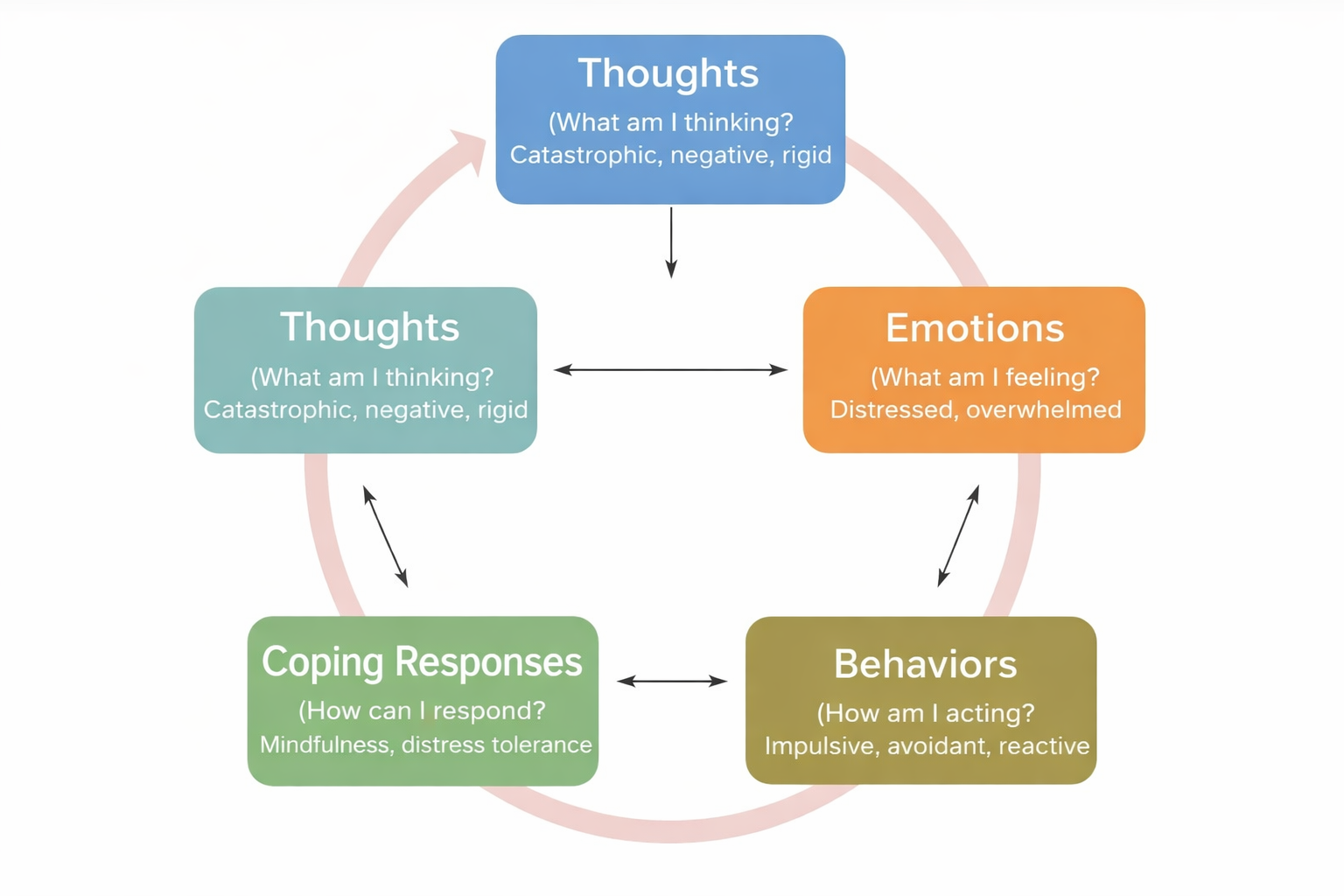
DBT is often practical, goal-oriented, and skills-focused, making it an effective option for those seeking structured support for emotional and behavioral challenges.
If you or someone you know may benefit from Dialectical Behavior Therapy, please contact us today. We would be happy to discuss how DBT-informed therapy may help.
A Balanced, Skills-Based Approach
DBT is more than simply talking through overwhelming emotions during a session. Therapy is structured and collaborative, with clear goals that support each meeting. Together, you and your therapist will work to better understand emotional patterns and practice skills that can be applied in everyday life between sessions.
Through guided self-awareness, DBT helps individuals recognize how intense emotions, thoughts, and behaviors influence one another. By learning to respond with mindfulness, distress tolerance, emotion regulation, and interpersonal effectiveness skills, people can reduce suffering, improve stability, and navigate life’s challenges more effectively.
What DBT Can Help With
Intense Emotions & Distress
DBT helps reduce emotional overwhelm, reactivity, and distress by teaching practical skills for coping, grounding, and staying present in difficult moments.
Depression & Low Mood
DBT supports individuals in managing painful emotions, building stability, and developing healthier responses that improve daily functioning and resilience.
Impulsive or Harmful Behaviors
DBT helps identify and change behaviors linked to emotional suffering, including avoidance, impulsivity, conflict, and other ineffective coping patterns.
What to Expect in DBT Sessions
DBT sessions are collaborative, structured, and skills-focused. From the beginning of therapy, you and your therapist will work together to identify concerns, set clear goals, and build a personalized plan for growth and emotional balance.
Sessions may include:
Exploring current challenges and emotional patterns
Learning how thoughts, emotions, and behaviors interact
Practicing mindfulness and distress tolerance strategies
Developing emotion regulation and interpersonal skills
Applying tools between sessions to support steady progress
DBT emphasizes learning and practicing skills that support stability and long-term change, so individuals feel more confident managing emotions, relationships, and daily stressors over time.
Frequently Asked Questions
-
Dialectical Behavior Therapy (DBT) is a structured, evidence-based therapy that helps individuals manage intense emotions, reduce harmful behaviors, and build healthier coping skills. It combines practical strategies with mindfulness, acceptance, and emotional regulation techniques.
-
DBT can help with emotional dysregulation, anxiety, depression, self-destructive behaviors, relationship difficulties, anger, stress, and other challenges involving intense emotions or ineffective coping patterns.
-
DBT is based on cognitive behavioral therapy but places a stronger emphasis on mindfulness, acceptance, distress tolerance, and balancing change with validation. It is especially helpful for people who feel overwhelmed by strong emotions.
-
DBT sessions often focus on understanding emotional triggers, identifying unhelpful patterns, and learning practical skills to manage distress, improve relationships, and respond more effectively in difficult situations.