
Acceptance and Commitment Therapy (ACT)

What Is Acceptance and Commitment Therapy (ACT)?
Acceptance and Commitment Therapy (ACT) is an evidence-based, mindfulness-oriented approach that helps people develop a different relationship with difficult thoughts and emotions. Rather than trying to eliminate uncomfortable internal experiences, ACT focuses on acceptance and present-moment awareness while building psychological flexibility.
ACT is effective for a wide range of concerns and is supported by extensive clinical research.
ACT can help you:
Notice and respond differently to difficult thoughts and emotions
Reduce anxiety, depression, and emotional avoidance
Develop psychological flexibility and mindful awareness
Shift patterns of avoidance that maintain ongoing struggles
Clarify personal values and take meaningful action
Rather than trying to control every thought or feeling, ACT emphasizes learning to live fully and move forward in ways that align with what truly matters.
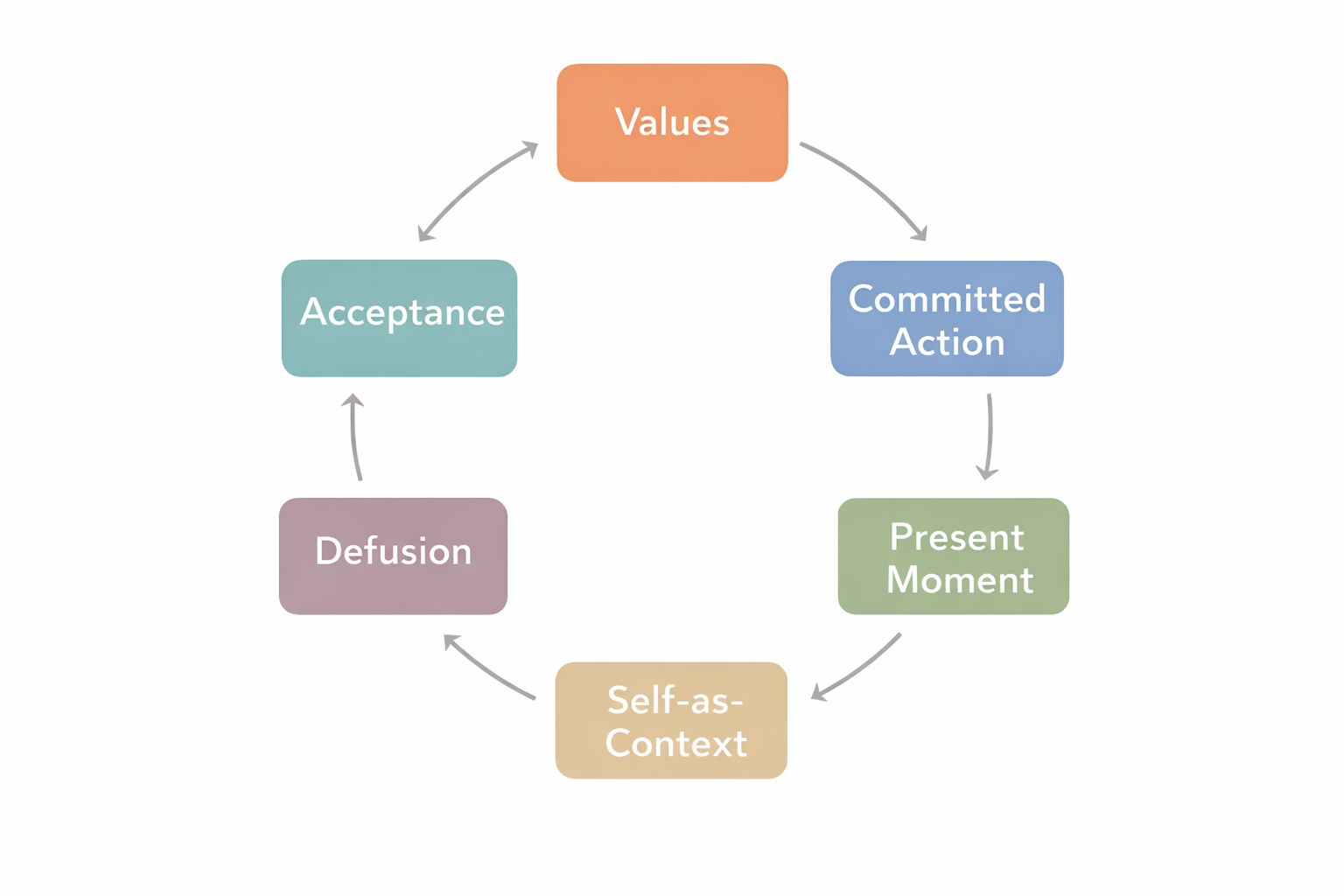
ACT is typically practical and goal-directed, making it an effective option for those seeking research-supported treatment that supports long-term, value-driven growth.
A Flexible, Values-Focused Approach
ACT is more than simply talking about whatever comes to mind during a session. Therapy is structured and collaborative, with clear goals that guide each meeting. Together, you and your therapist will build mindfulness skills to help you notice thoughts and feelings without getting pulled into them.
Through acceptance and present-moment awareness, ACT helps individuals reduce the struggle with painful internal experiences. Instead of avoiding discomfort, clients learn to make room for what shows up while choosing actions that support meaningful change.
What ACT Can Help With
Anxiety & Excessive Worry
ACT helps you step out of “avoidance cycles” (putting things off, withdrawing, numbing, overthinking) and move toward what matters, even when it feels uncomfortable.
Stress & Life Transitions
ACT supports you in navigating change with more steadiness—building present-moment skills, clarity, and flexible coping during busy, uncertain, or high-pressure seasons.
Self-Compassion & Relationships
ACT can help you respond with more kindness and intention—reducing self-criticism, strengthening boundaries, and improving how you show up in relationships.
What to Expect in ACT Sessions
ACT sessions are collaborative, mindful, and values-focused. From the beginning of therapy, you and your therapist will work together to identify what matters most, explore what’s getting in the way, and build skills to support meaningful change.
Sessions may include:
Clarifying personal values and setting value-driven goals
Practicing mindfulness and present-moment awareness
Learning defusion skills to relate differently to thoughts
Building acceptance for difficult feelings and experiences
Identifying avoidance patterns and increasing flexibility
Using tools between sessions to support real-life progress
ACT emphasizes living with greater purpose and choice—so individuals can move forward even when thoughts or emotions feel challenging.
Frequently Asked Questions
-
Acceptance and Commitment Therapy (ACT) is an evidence-based, mindfulness-informed approach that helps you change how you relate to difficult thoughts and feelings. Instead of trying to “get rid of” anxiety, sadness, or intrusive thoughts, ACT teaches skills to make room for internal experiences while still choosing actions that align with your values. The goal is psychological flexibility—being able to stay present, respond with intention, and move toward what matters even when life feels hard.
-
Traditional CBT often focuses on identifying and changing unhelpful thought patterns to improve mood and behavior. ACT can overlap with CBT, but the emphasis is different: ACT focuses less on debating whether a thought is true and more on whether following that thought is helpful. You learn to notice thoughts as mental events (“I’m having the thought that…”) rather than instructions you must obey. ACT also puts a strong focus on values—clarifying what matters most to you and building habits that support a meaningful life, even when symptoms show up.
-
ACT sessions are practical and structured, but also flexible and tailored to you. You and your therapist typically:
Identify what you’re struggling with and how you currently cope (including avoidance patterns)
Practice mindfulness and grounding skills to build present-moment awareness
Learn “defusion” techniques to reduce the power of sticky thoughts (worry, self-criticism, rumination)
Develop acceptance skills to reduce the fight with uncomfortable emotions
Clarify values (relationships, health, work, parenting, growth, faith, etc.)
Create small, realistic commitments to take values-based action between sessions
Over time, sessions help you build confidence in responding differently to internal stress—so your choices are guided by values, not fear or discomfort.
-
ACT is helpful for many people who feel “stuck” in cycles of avoidance, overthinking, or emotional overwhelm. It can support concerns such as:
Anxiety, worry, panic, and stress
Depression, low motivation, and burnout
Trauma-related symptoms and emotional numbness
OCD-related intrusive thoughts (as part of a broader treatment plan)
Chronic pain, health anxiety, and sleep challenges
Self-criticism, perfectionism, and low self-esteem
Relationship conflict, boundaries, and communication struggles
ACT is especially useful if you’ve tried to “think your way out” of distress and still feel caught—because it gives tools to move forward even when thoughts and feelings don’t cooperate.